Micro-pantries, big science—and Ridwell is part of it
Update - May 18, 2026: Pantry Map, the app showing local pantry locations, is now live.
If you've ever spotted one of those little free pantry boxes in a Seattle neighborhood—stocked with canned goods, snacks, or fresh produce—you've seen a micro-pantry in action. These community-powered resources are quietly doing important work, and now they're at the center of an innovative research project we’re excited to be a part of.
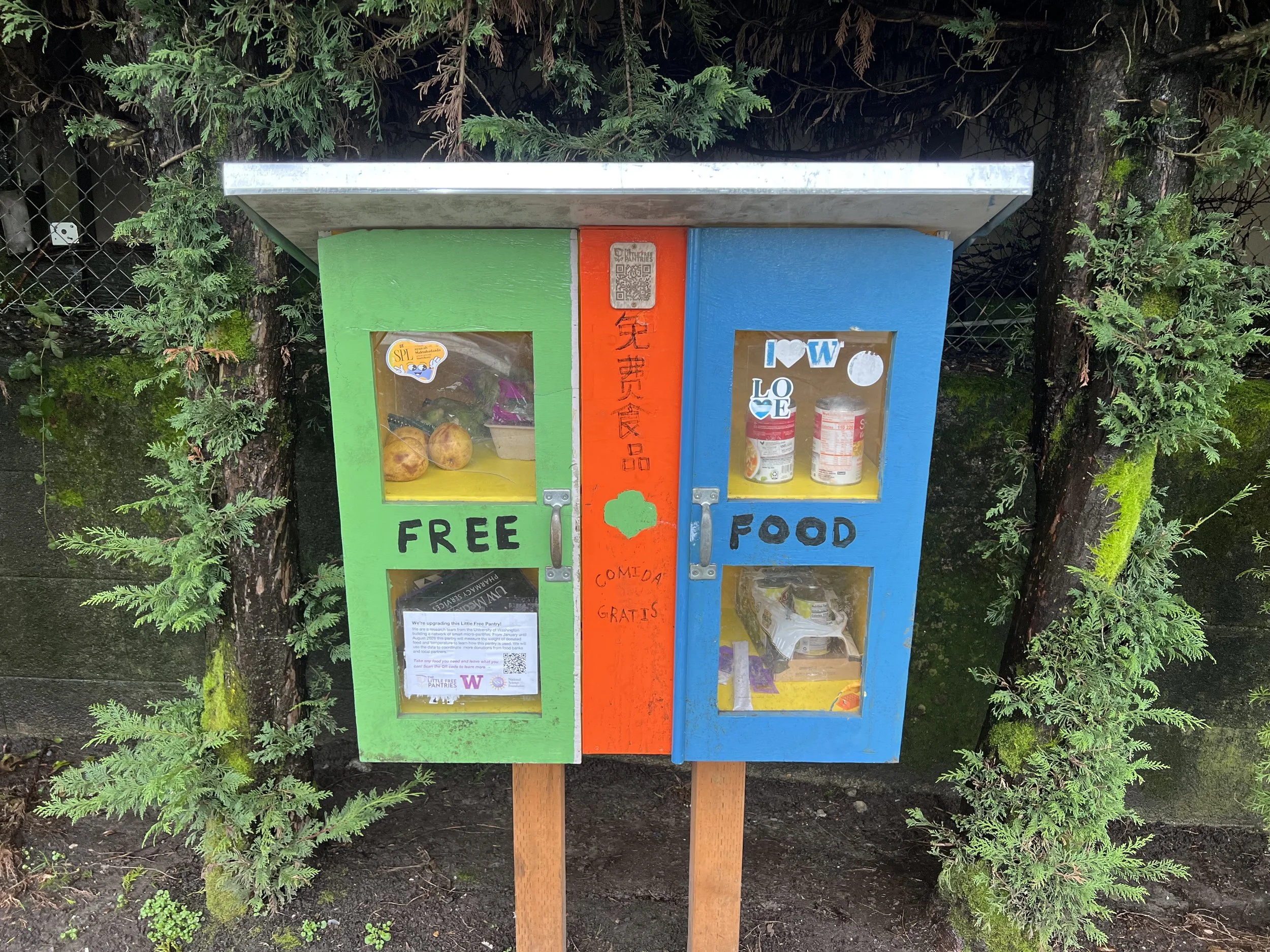
A micro-pantry in Beacon Hill, one of the many in Seattle involved in the UFL research project.
What's happening
The University of Washington's Urban Freight Lab recently won a $1 million National Science Foundation grant to study how micro-pantries can be leveraged to advance food security and (food) waste reduction across Seattle. Part of this study includes retrofitting existing micro-pantries with low-cost and low-impact sensors (to detect weight changes, and track usage), making them “smarter.” The project is one of only 14 funded nationally—and the only project granted phase 2 funding on the contiguous West Coast. If it works, this case study could be shared with other micro-pantry networks across major metropolitan areas nationwide.
Additionally, the UW research team is working toward releasing a digital pantry finder later this spring. The goal with releasing this tool is to empower both individuals looking to donate food and those in need to connect with one another. This would allow for donation reporting, wishlist posting, city-wide micro-pantry mapping, and understanding utilization trends.
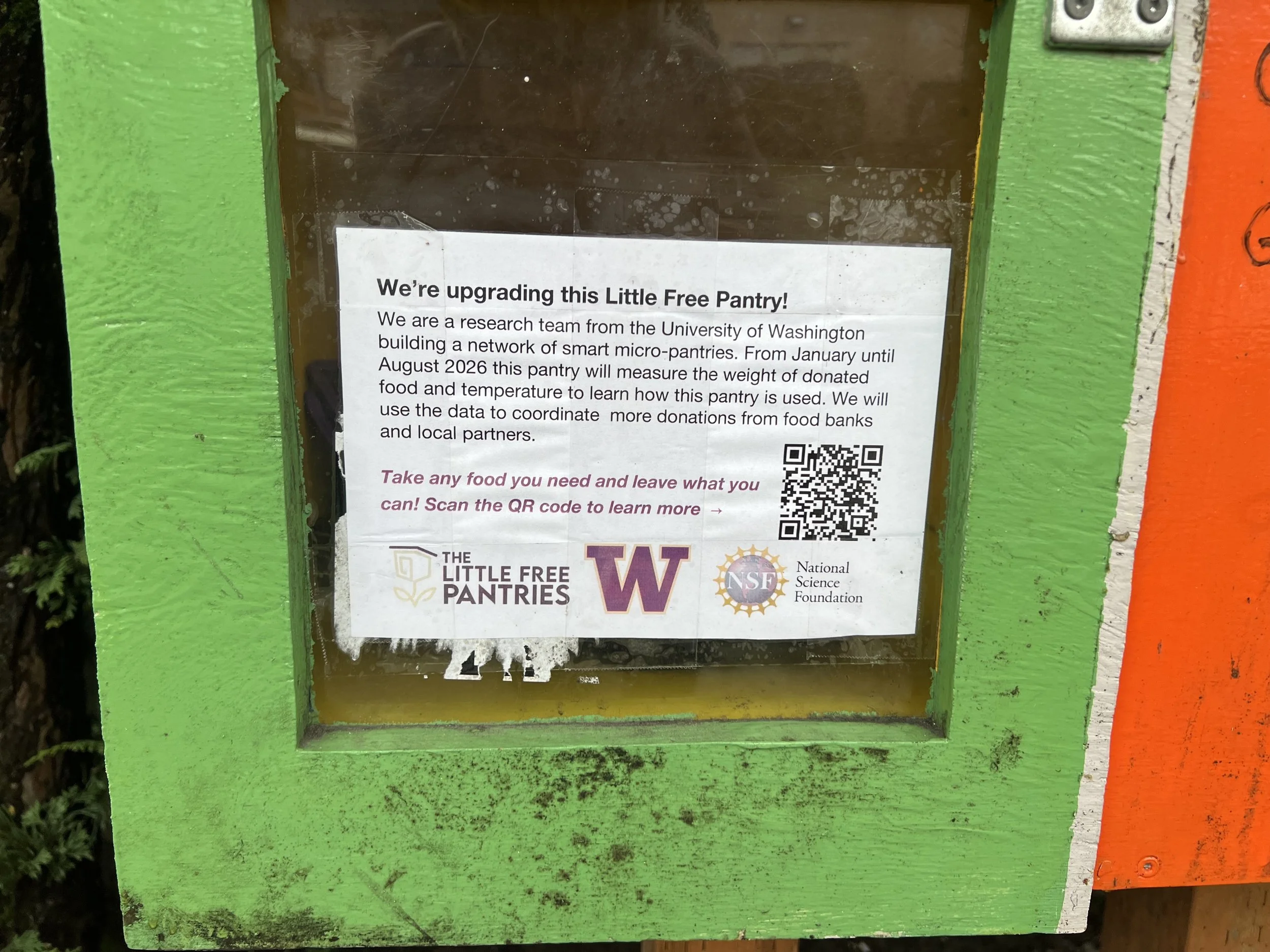
A sign announcing how frequenters of Seattle's micro-pantries will play a key role in the project.
Where Ridwell comes in
During this Spring’s Non-Perishable Food Collection in Seattle, Ridwell is partnering with the UW team—with members from the Paul Allen School, School of Public Health, and Engineering School—and other local organizations to help put the research into action. A portion of the items collected as part of the Featured Category will be distributed to micro-pantries across the city in collaboration with the University District Food Bank (storing and distributing food donation) and the Cascade Bicycle Club’s Pedaling Relief Project (distributing food to micro-pantries by bike).
UW researchers will track how it moves through the system—helping build a clearer picture of what our communities need and how to meet those needs more effectively. The upcoming digital pantry finder will make this information accessible by the public, and provide opportunity for community engagement.
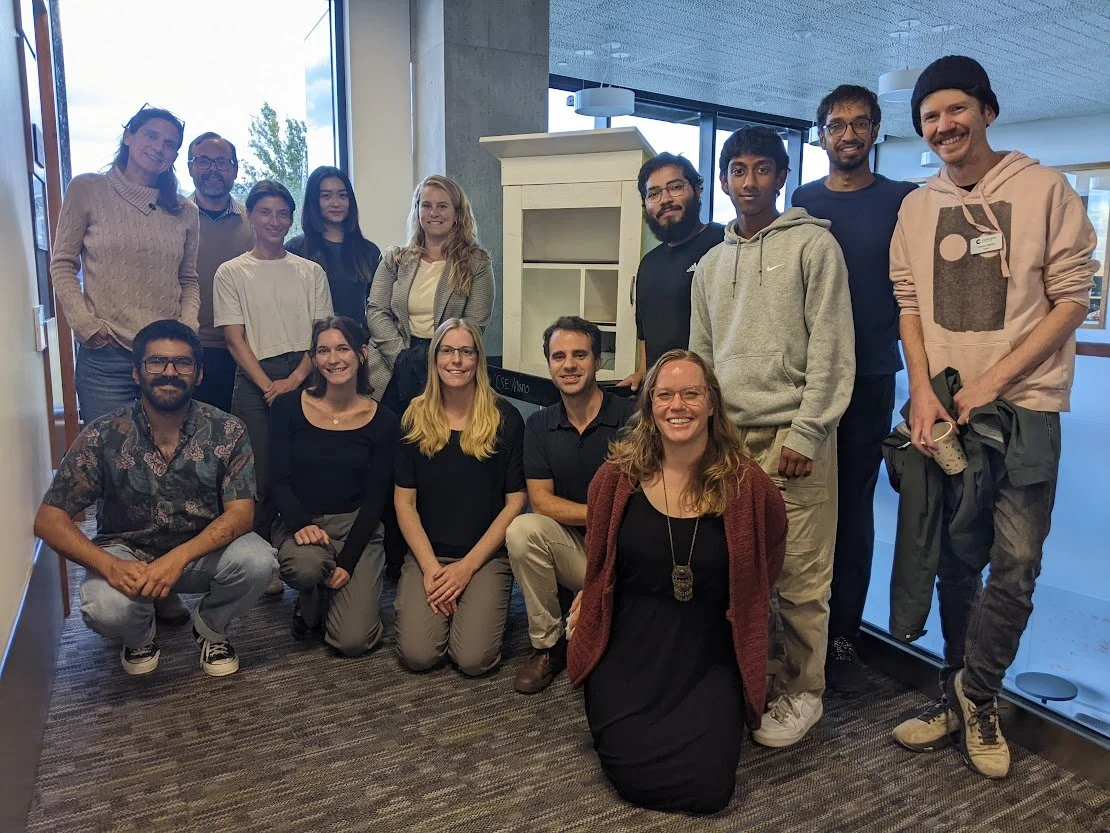
Representatives from each of the civic partners pose with the project's UW research team.
Why this project matters
In Seattle, about 13% of adults experience food insecurity—and that number is higher for families with children. Food is also the single largest category of material ending up in landfills. Micro-pantries sit at the intersection of both problems: they give people a way to share surplus food with neighbors who need it most, right in their own community.
We’ve always believed that reducing waste and strengthening communities go hand in hand. This partnership is a chance to do both at once—and to contribute to research that could shape food policy and community resilience far beyond Seattle.
Stay tuned
We'll share more details about the project and how else you might be able to benefit from the findings soon! In the meantime, keep an eye out for micro-pantries in your neighborhood. They're small, but they're mighty—and with your help, they're about to get a whole lot smarter.
Not a Ridwell member?